Monthly Archives: July 2026

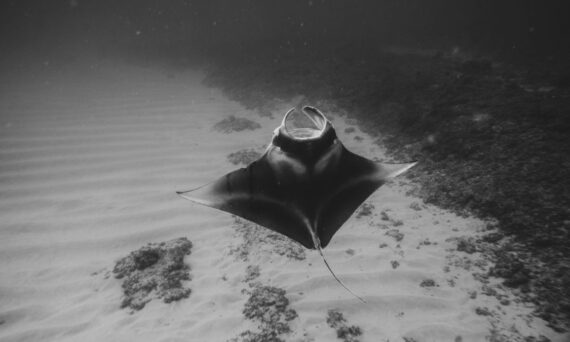
a manta ray swimming underwater 570x342 - What Genetic Research Revealed About the Small Manta Population Behind Kona's Night Snorkel

What Genetic Research Revealed About the Small Manta Population Behind Kona’s Night Snorkel

The manta rays that draw thousands of snorkelers to Kona every year feel limitless when you are floating above them. A good night puts giant rays inches from your face, looping and feeding in the lights, and it is easy to assume the supply of these animals is as endless as the ocean they live in. The science says otherwise, and what it says is sobering enough to change how a thoughtful person thinks about the encounter.

The first genetic study of Hawaii’s reef manta rays produced findings that reframe the Kona manta from a reliable attraction into something closer to a small, fragile, irreplaceable community of individuals. Understanding that does not diminish the experience. It deepens it.

A Population Smaller Than a Wedding Guest List

Researchers from a federal fisheries science center, a Hawaii marine research association, and a university teamed up to run the first genetic study of these animals, using genome scans to compare the rays around Hawaiʻi Island with those of the Maui Nui island complex. The headline result is that the populations are small, isolated, and genetically distinct from one another, each made up of only a few hundred individuals.

The breeding numbers are smaller still, and that is where it gets genuinely startling. According to NOAA Fisheries, the study estimated only about 104 adult breeders in the entire Hawaiʻi Island population. The total population is small; the actively breeding portion of it is tiny. As one of the study’s coauthors put it, with so few breeders, the loss of a single individual could have long-term consequences for the resilience of the whole group.

The genetic evidence lines up with what photo identification had already suggested. Researchers have catalogued individual mantas by the unique spot patterns on their bellies, and around Hawaiʻi Island they have logged just over 300 unique individuals since 1979. Decades of careful observation and the new genome data point to the same conclusion: this is a very small community of animals that researchers have been getting to know, one identifiable individual at a time, for more than forty years.

Mantas That Never Leave Home
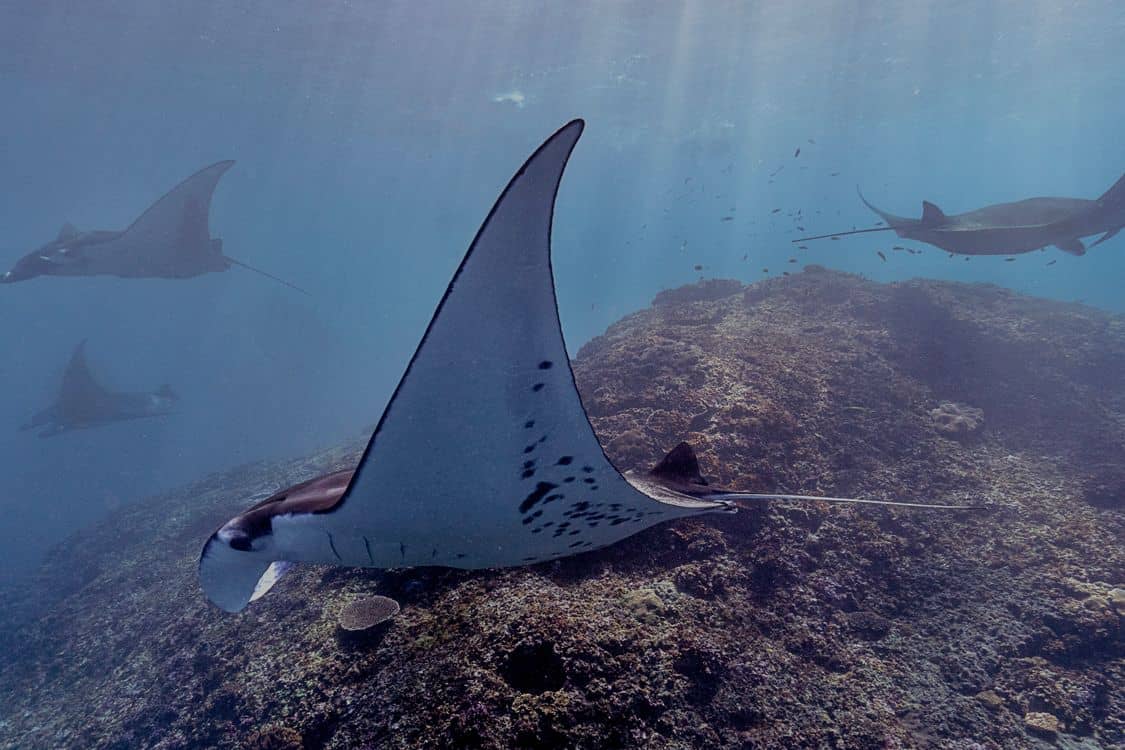
manta rays gliding gracefully underwater - What Genetic Research Revealed About the Small Manta Population Behind Kona's Night Snorkel

The other major finding explains why these populations are so vulnerable, and it is biologically remarkable. Reef mantas are strong swimmers, fully capable of crossing the channels between the Hawaiian islands. They simply do not. The study found that females reproduce only at the island where they were born, and that movement between island groups is almost nonexistent, on the order of one female crossing every 1,300 years and one male roughly every 64 years.

That homebody behavior has a stark consequence the lead researcher stated plainly: each island population is on its own. If the manta population in West Hawaii declines, the neighboring islands are not going to repopulate it. There is no reinforcement coming. The Kona mantas are a closed system, sustaining themselves or not entirely on their own.

Their biology offers little cushion against decline. Mantas grow slowly, mature late, and reproduce at a glacial pace, with mature females producing only a single pup every one to seven years. A population with that reproductive rate cannot bounce back quickly from a loss. It builds slowly and recovers slowly, which means any serious dip could take generations to undo, if it can be undone at all.

The Weight of an Encounter

This is the context that should sit quietly behind every Kona night manta ray snorkel. The rays passing beneath you are not anonymous members of a vast, replaceable population. They are individuals from a community of a few hundred, many of them known and catalogued by name and spot pattern, sustained by barely a hundred breeding adults, with no backup from anywhere else.

The threats they face are concrete and human. The same research noted that one in ten of these mantas shows evidence of fishing-line entanglement, with amputated fins, lacerations, or embedded hooks. Boat strikes are a real danger, because mantas feed near the surface where propellers can reach them. Coastal development degrades the reef habitat they depend on for cleaning, socializing, and raising young. None of these are abstract; they are the everyday hazards of sharing crowded coastal water with a slow-reproducing animal.

For the visitor, this knowledge cuts in a clear direction. It is an argument for choosing operators who treat the mantas with genuine care, who keep their distance, who follow the practices that minimize disturbance and injury, and who understand that a manta lost is not easily replaced. The thrilling reliability of the Kona encounter can make the whole thing feel industrial and inexhaustible. The genetics tell the opposite story. Each ray in the lights is a meaningful fraction of an entire island’s population, and seeing it that way turns a bucket-list checkbox into something that carries real weight.
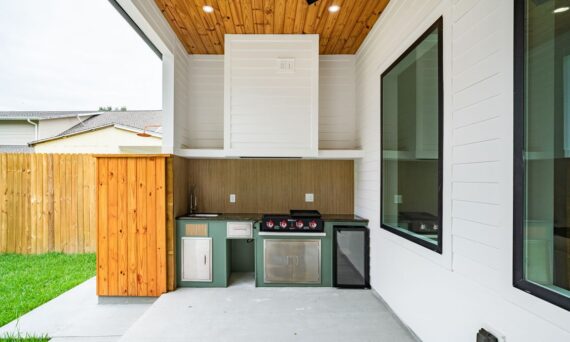
Sleek outdoor kitchen setup with BBQ and fridge 570x342 - The ROI Math Quietly Driving San Diego's Outdoor Kitchen Boom

The ROI Math Quietly Driving San Diego’s Outdoor Kitchen Boom

Ask a San Diego homeowner why they’re adding an outdoor kitchen and most will talk about grilling more, hosting more, and using the yard more. Ask their real estate agent, and a different explanation comes up just as often: buyers notice, and it shows up in what they’re willing to pay.

What Realtors Are Actually Telling Sellers

The National Association of Realtors surveys its members regularly on which exterior features move buyers, and the numbers are consistent from year to year. 92% of Realtors have suggested sellers improve curb appeal before listing, and nearly all consider it important to how buyers perceive a home.

Outdoor kitchens sit near the top of the features agents point to when they talk about exterior improvements that read as intentional rather than cosmetic. A built-in grill station with counter space and storage tells a buyer the home has been set up for actual use, not staged for a photo.

Why the Math Works Differently in a Year-Round Climate

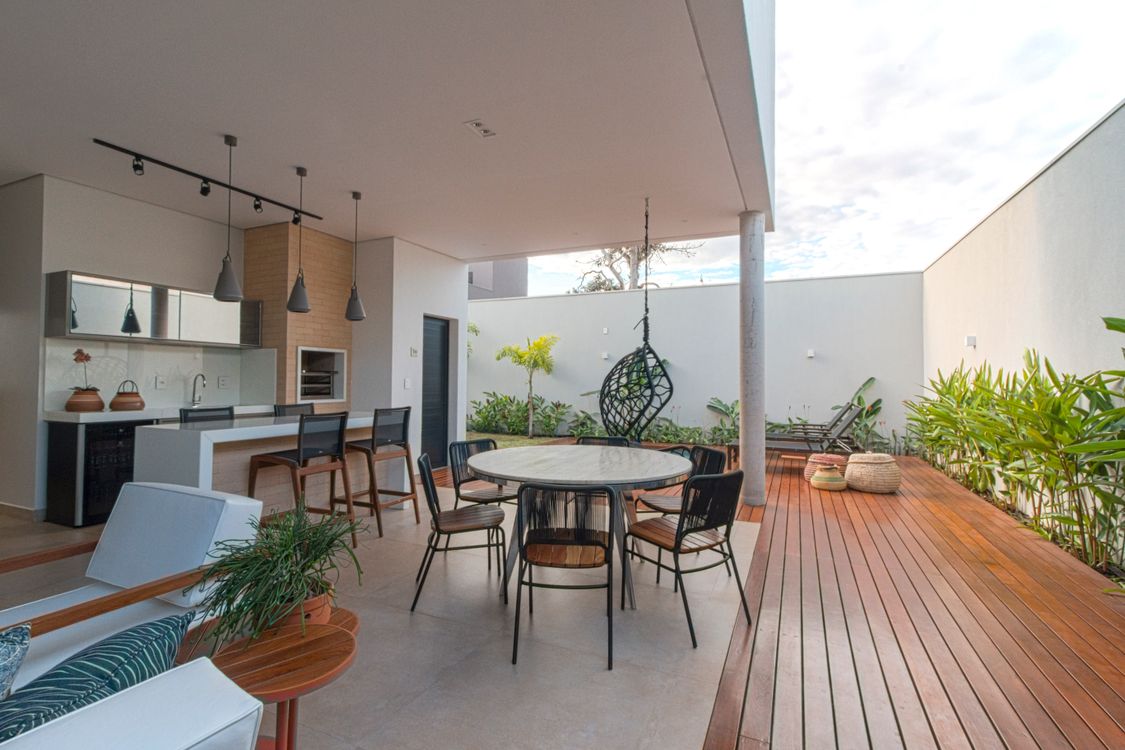
Stylish open patio with dining set kitchen and outdoor decor - The ROI Math Quietly Driving San Diego's Outdoor Kitchen Boom

National estimates for outdoor kitchen returns vary widely depending on scope and materials, but they consistently land higher than most interior remodels, and San Diego’s climate is a major reason why. An outdoor kitchen in a region with genuine winters sits unused for a third of the year. In San Diego, with roughly 260 sunny days annually, the same structure gets used across nearly every month, which changes how buyers and appraisers alike weigh the investment.

That usability gap is also why San Diego outdoor kitchens have gotten more ambitious over the past several years. What used to be a built-in grill and a small counter has increasingly become a full second kitchen: refrigeration, prep space, sometimes a pizza oven, all under some form of shade structure that extends its usable hours into the hottest part of the afternoon.

Materials matter for the return, too. Porcelain and sealed concrete counters resist the sun exposure and moisture that would degrade lower-grade materials faster near the coast, and buyers increasingly recognize the difference between a durable installation and a weekend project that’s already showing wear.

Reading the Trend Without Overbuilding

Not every outdoor kitchen pencils out the same way. A high-end build in a modest neighborhood risks the same over-improvement problem that oversized interior remodels run into: spending more than comparable homes in the area can support at resale.

What the data does support is a fairly consistent pattern: San Diego buyers treat a well-built outdoor kitchen as functional square footage, not a luxury add-on, and agents’ curb-appeal advice reflects that. In a climate built for outdoor living, the ROI case for an outdoor kitchen isn’t really a bet on trends. It’s a bet on a backyard getting used.

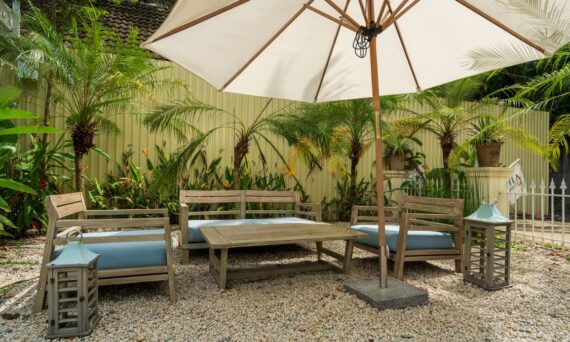
garden patio with wooden chairs table and umbrella 570x342 - How the 2026 Water Supply Picture Is Reshaping Tropical Yards Across San Diego County

How the 2026 Water Supply Picture Is Reshaping Tropical Yards Across San Diego County

Tropical-style landscaping has an image problem in a dry state: lush foliage looks thirsty. The reality in 2026 is more interesting, and it starts with the numbers coming out of the state’s water managers. By late spring, the Department of Water Resources had raised the State Water Project allocation to 45 percent of requested supplies, up from 30 percent earlier in the year.

An allocation moving up is good news, but the framing around it is the real signal. The increase followed a wet December that managers were careful not to oversell, with officials noting a dry January, limited northern Sierra snowpack, and Colorado River reservoirs still near historic lows. The message to Southern California was relief, not resolution.

For homeowners drawn to a tropical look, that mixed picture is shaping a smarter version of the style, one built to read lush while staying water-aware.

Why Tropical and Drought-Aware Are Not Opposites

The instinct that tropical means high water is half right. The look depends on bold foliage, layered heights, and a sense of fullness, but those visual cues do not all require thirsty plants. Much of the effect comes from leaf shape and arrangement, not from constant irrigation.

San Diego County’s Mediterranean climate, with its dry summers and mild winters, actually supports a long list of subtropical plants when they are placed correctly and grouped by water need. Palms add height and structure, bird of paradise delivers bold form in both coastal and inland yards, and species like ti plants and elephant ear supply the broad-leaf drama in the right microclimates.

The discipline is in the grouping. Hydrozoning, putting plants with similar water needs together, lets the thirstier specimens cluster where irrigation is efficient while the rest of the yard leans on low-water material. Done well, the eye reads a unified tropical scene; the water bill reads something far more modest.

Ground treatment carries some of the load, too. Mulch holds soil moisture, drip irrigation delivers water to roots instead of air, and surfaces like decomposed granite and stone keep paths cool without demanding a drop. These are not compromises to the look; they are the substructure that makes it sustainable.

Designing Around an Uncertain Supply

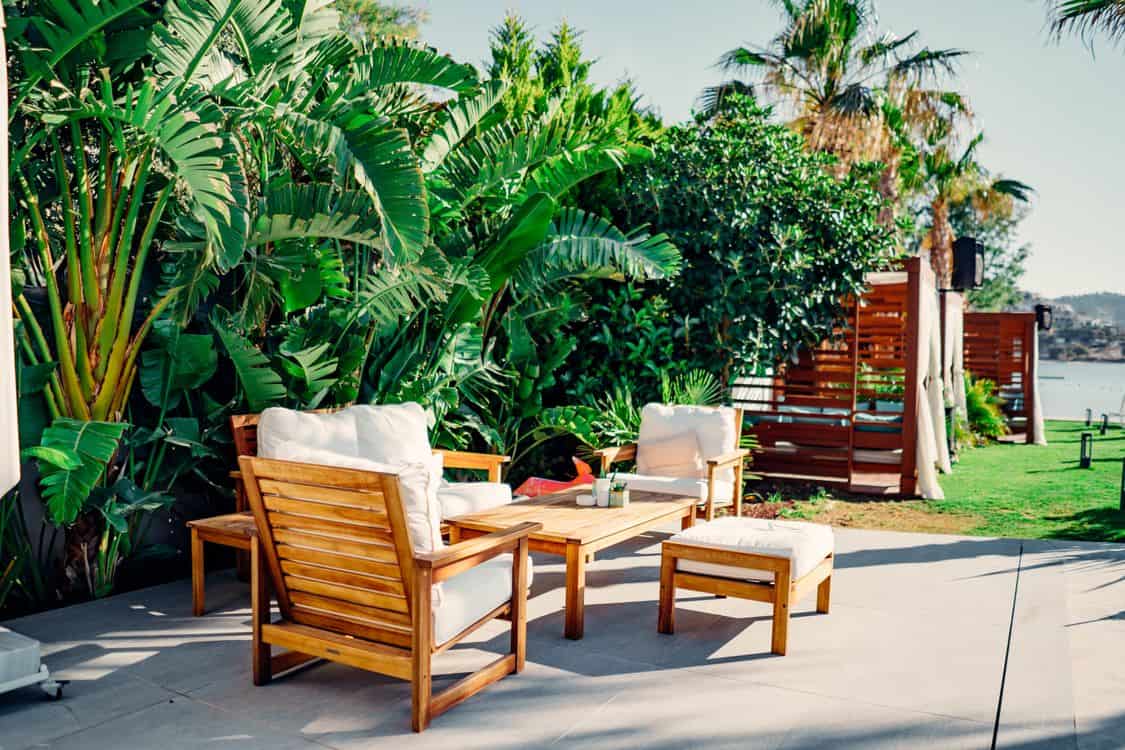
outdoor patio with wooden furniture surrounded by tropical plants - How the 2026 Water Supply Picture Is Reshaping Tropical Yards Across San Diego County

The state’s own posture, treating an improved allocation as temporary relief rather than an all-clear, is the right model for a homeowner planning a yard. The smart assumption is that water will be available but never to be wasted, and the design should hold up whether the next winter is wet or dry.

That argues for a backbone of plants that thrive on little, accented by a smaller number of higher-water statement specimens. A few well-placed palms or a single dramatic broad-leaf grouping can carry the tropical impression, while the surrounding planting stays lean. The contrast is what sells the style; you do not need the whole yard to be thirsty.

Water features follow the same thinking. The tropical vocabulary loves the sound of moving water, and recirculating systems, pondless waterfalls, wall fountains, and narrow basins, deliver that atmosphere while limiting waste. A feature that loops its water reads as lush without behaving like a leak.

Shade is the quiet multiplier. Pergolas, shade sails, and well-placed tall plants cut evaporation and reduce the heat stress on both people and plants, especially in the warmer inland parts of the county. A shaded planting bed simply needs less water than one baking in full afternoon sun.

What This Means for Homeowners This Year

For anyone planning a tropical-style project in San Diego County, the takeaway is not to abandon the look. It is to build it on a water-aware frame from the start, because retrofitting conservation into a thirsty design later is harder and more expensive than designing for it up front.

Start with the plant palette and the hydrozones, settle the irrigation method, and treat the highest-water elements as deliberate accents rather than the default. A yard built this way tends to stay healthier through dry stretches and looks intentional rather than stressed when restrictions tighten.

It is worth remembering that allocations and local rules can move in either direction from year to year, and a single agency figure is not a forecast for your own water district. Homeowners should confirm current local watering rules before committing to a planting plan, since those rules, not the statewide allocation, govern what happens in a given yard.

The larger pattern is clear enough, though. The tropical yards being built in the county now are quieter about their water use than the ones built a decade ago, and they look just as full. The style adapted to the climate, which is exactly what good landscape design is supposed to do.

Part of that adaptation is regional, too. A coastal yard near the ocean can lean on salt-tolerant species and layouts that welcome airflow, while an inland property contends with hotter afternoons that make shade and careful plant spacing more important. The same tropical vocabulary gets tuned differently depending on which part of the county a home sits in.

Long-term care is where these designs prove themselves. Slow-growing plant varieties, mulch to hold soil moisture, and irrigation grouped by need keep a mature tropical yard manageable rather than demanding. A scene that looks effortless after a few years is almost always one that was planned for low upkeep from the first day, not one that happens to stay lush by luck.