
Las Vegas’s Useless-Grass Deadline Is Sending Homeowners Toward Pergolas and Patio Covers
For a long time the Las Vegas backyard followed one formula. A patch of green grass, a strip of concrete, maybe a tree fighting to stay alive. That formula is getting rewritten by law, and the replacement is changing how people think about shade.
The driver is Nevada’s landmark turf-removal policy, which is forcing decorative grass out across big stretches of the valley. As the lawns come out, homeowners hit a question they didn’t used to face. If not grass, then what makes the backyard usable?
More and more, the answer is a built structure. Once you can’t count on a cool green lawn underfoot, shade overhead becomes the thing that makes outdoor space livable, and pergolas and patio covers are stepping into that role.
A water law with real teeth
This isn’t a voluntary conservation campaign. Nevada law mandates the removal of nonfunctional turf at non-single-family properties, tied to a hard deadline and an enforcement cliff right behind it.
It’s been contentious enough to land in court. As of spring 2026, the water authority had asked the Nevada Supreme Court to dismiss a lawsuit from homeowners who argued the grass restrictions were killing the mature trees in their communities.
That fight is telling, because it surfaces the real tension under the policy. Grass did more than look nice. It cooled the ground and fed the trees that shaded it. Pull the lawn without a plan and a yard can end up hotter and more exposed than before, which is exactly why the conversation has moved toward replacing the cooling job grass used to do with something that drinks far less water.
Why shade structures fill the gap grass left
The cooling a lawn provided has to come from somewhere. In a xeriscaped yard of rock, decomposed granite, and desert plants, hardscape can actually throw off more heat than the grass it replaced, which makes shade overhead more important, not less.
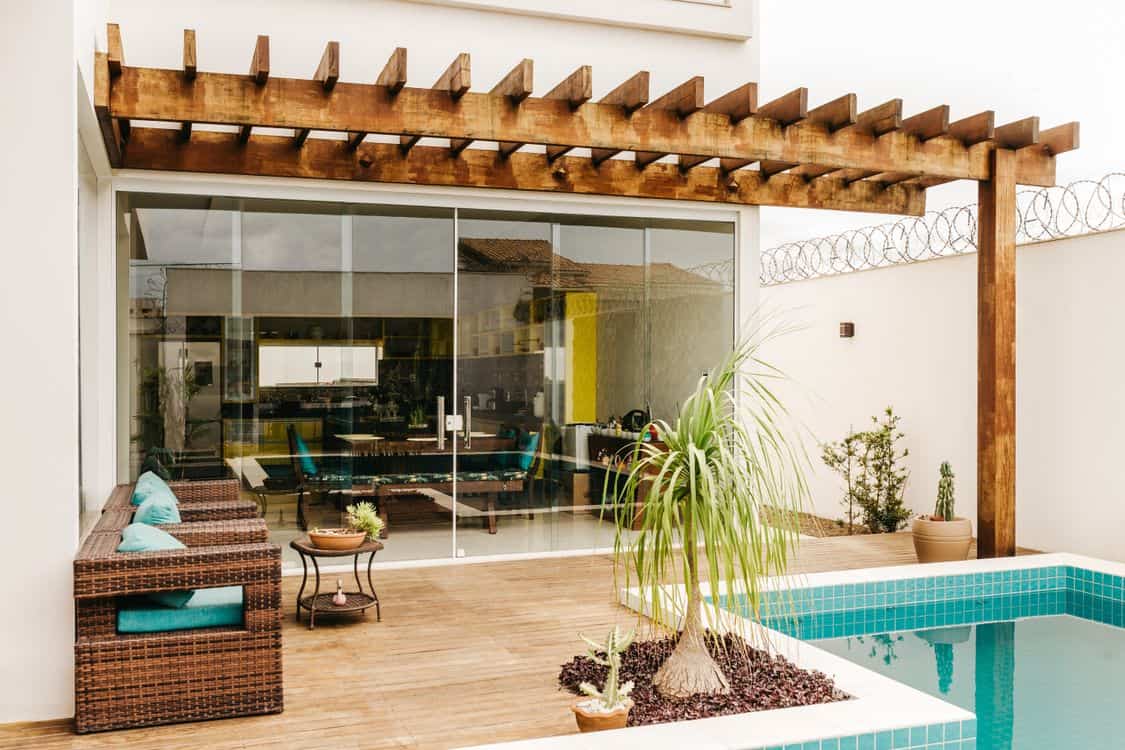
A pergola answers part of that. It throws filtered shade while keeping an open, airy feel that suits desert planting, and it pairs naturally with climbing vines to carve out a zone of relief in a yard that lost its green carpet.
Where the goal is deeper, more reliable shade, a solid or lattice patio cover does the heavier lifting. It creates a genuinely usable outdoor room over the hardscape, the kind of space that makes a water-smart yard feel like an upgrade instead of a sacrifice. The new valley template is basically this: drip-irrigated desert plants at grade, a built shade structure overhead, comfortable seating underneath. Way less water, more usable comfort than the old lawn ever delivered.
Designing the post-lawn backyard
The best conversions treat shade as the organizing idea instead of an add-on. Rather than scattering plants and hoping, homeowners are designing around a central shaded structure and building the landscape outward from it.
Trees still matter here, and the lawsuit over tree health is the reminder of that. But trees take years to throw real shade, and a built cover works the day it goes up, so a lot of people pair fast structural shade with slower-growing canopy trees and let time do the rest.
Material durability fits the water-conscious mindset. Aluminum cover systems need no irrigation, no staining, barely any upkeep, which lines up with the low-resource direction the whole valley is being pushed. There’s a value angle too. As turf disappears and shade becomes the scarce comfort, a well-built covered space stands out in a way a lawn no longer can.
The grass mandate got framed as a water-saving measure, and it is one. Its quieter effect is a redesign of the desert backyard around built shade. The lawn is leaving. The thing that replaces its comfort is moving in overhead, right where it belongs.