What Redfin’s Austin Cool-Off Forecast Could Mean for Round Rock Roofing Demand
Redfin published its 2026 housing outlook in December. For the Austin metro, the report used a specific phrase: cool off.
Redfin’s forecast is useful for Round Rock because the city sits within the broader Austin housing market, but the report does not directly measure Round Rock roofing demand.
Redfin’s Own Numbers Read More Like a Plateau Than a Crash
The national forecast calls for mortgage rates averaging 6.3% through 2026, down slightly from 6.6% this year, and existing home sales rising about 3% to an annualized 4.2 million. Redfin expects the median home price to rise just 1% nationally next year, which is barely above flat once ordinary maintenance and closing costs get counted.
Austin gets singled out by name. The report groups it with Nashville as a pandemic-era boomtown that won’t stay as hot now that remote workers are drifting back toward offices.
Round Rock is part of the Austin-Round Rock metro, so a regional housing slowdown is relevant context. Local listing and roofing data would still be needed to quantify Round Rock-specific behavior.
That framing lines up with what’s already happened locally. Austin-area median prices have fallen roughly 20% in nominal terms from their May 2022 peak, and closer to 27% once inflation gets factored in.
Round Rock never ran quite as hot as the priciest Austin zip codes, and it isn’t correcting as sharply either. But it’s part of the same metro-area MLS pool, tracked in the same monthly reports, and it moves on the same rate cycle as everywhere else in the region.
Redfin’s own language matters here too. The report calls this a yearslong normalization rather than a quick correction, and it explicitly says it won’t be a recession. That’s a meaningfully different story than the one a lot of homeowners braced for after 2022’s rate spike.
What a Slower Housing Market Could Change About Roof Negotiations
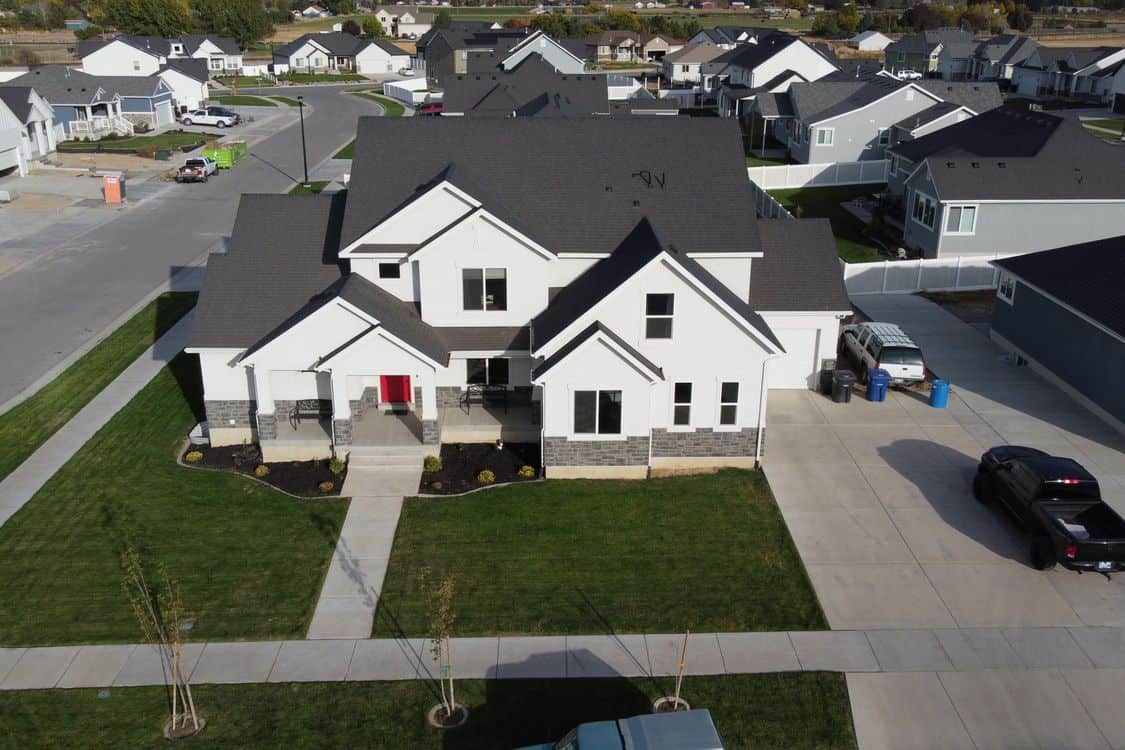
In a slower market, buyers generally have more time to inspect and negotiate than they do during a bidding frenzy. That can make roof age and condition more visible during due diligence. In a slower market, an roof replacement in Round Rock completed before listing can remove one large maintenance question, but only when the roof actually warrants replacement.
A roof defect can become a negotiation item because it represents a future cost, but the Redfin forecast does not tell us how often that is happening in Round Rock.
Sellers may choose to repair a roof before listing, disclose its condition, price around it, or wait to negotiate after inspection. The best choice depends on the roof and the transaction.
Round Rock roofers may see more pre-listing questions in a slower market, but the practical point is simply that sellers have more reason to address an aging roof before it becomes a negotiation item.
During a faster seller’s market, buyers often had less leverage to negotiate over deferred maintenance. In a slower market, a roof nearing the end of its service life can become a more visible bargaining point.
A slower market gives buyers more time to compare similar homes. That gives sellers a stronger reason to decide before listing whether to repair an aging roof, disclose it, or price the expected work into the deal.
Buyers May Have More Room to Ask for Repairs or Credits
A more balanced market can give buyers more negotiating leverage, though the outcome of any individual roof request depends on price, competition, inspection findings, and contract terms.
Buyers can ask for repairs or credits; sellers can accept, reject, or negotiate them. A market forecast changes bargaining context, not contractual rights.
A deferred roof issue discovered during inspection can turn into a repair request, credit request, price negotiation, or even a reason for a buyer to walk away, depending on the contract and market.
Roof age can become more visible in a slower transaction because both sides have more room to investigate large maintenance items.
A homeowner planning to sell soon may choose to address an aging roof before listing, while someone staying for years can treat the same decision as ordinary maintenance rather than market timing.
Someone staying put for the next decade faces a different calculation entirely, closer to ordinary maintenance than market timing. Either way, the cool-off Redfin is forecasting doesn’t remove the roof from the conversation. If anything, a slower market with more scrutiny per transaction puts it right in the middle of one.
The cooler Austin market can make roof condition harder to ignore because buyers have more room to inspect, compare, and negotiate.