
The United States has quietly become the world’s dominant exporter of ethane, the natural gas liquid that feeds petrochemical crackers from Texas to China. That trade runs on a chain of cryogenic infrastructure, and at the cold end of it sits a specialized family of steel.
Every new export terminal that comes online needs tanks that can hold liquefied hydrocarbons at deeply sub-zero temperatures without going brittle. That is a narrow materials problem with a well-established answer.
Cold storage is the bottleneck nobody sees
Ethane has to be chilled to roughly minus 89 degrees Celsius to be stored and shipped as a liquid, and ethylene goes colder still. At those temperatures, ordinary carbon steel loses its toughness and can fracture without warning.
The terminals being built to handle these products are therefore as much cryogenic engineering projects as they are export facilities. The refrigerated storage tank is the heart of each one.
Consider the scale of a single project. Enkon Energy describes one ethane export terminal built around two 50,000 cubic metre cryogenic tanks, part of a half-billion-dollar joint investment to keep a downstream petrochemical complex supplied.
Multiply that across the wave of new and expanded terminals along the Gulf Coast and the demand for cryogenic-rated steel becomes substantial.
Why nickel is the alloying element that matters
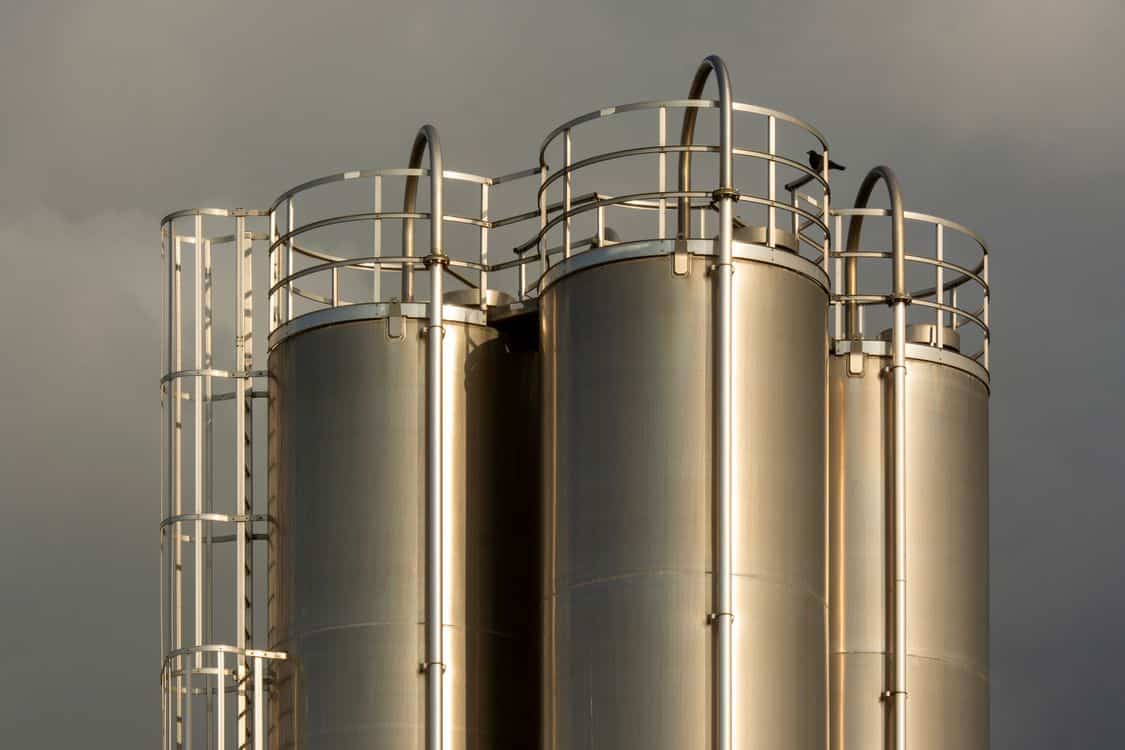
The metallurgical fix for cold embrittlement is nickel. Adding nickel to steel keeps it tough at temperatures where plain carbon grades would shatter, and the amount of nickel sets how cold the steel can safely go.
A 5 percent nickel alloy steel plate sits in a useful sweet spot for much of this duty. It stays tough well below the temperatures ethane and ethylene storage demand, without the cost of the 9 percent nickel grades reserved for the very coldest liquefied natural gas service.
That is the niche a specification like ASME SA-645 fills. It covers 5 percent nickel alloy steel plate intended specifically for cryogenic pressure vessels and storage, giving designers a material rated for low-temperature service at a more accessible price point than the deepest-cold alloys.
The choice between nickel grades is rarely arbitrary. Designers match the steel to the coldest temperature the equipment will actually see, then stop there, because over-specifying nickel content is an expensive way to buy margin nobody needs.
For ethane and ethylene storage, the 5 percent nickel option often lands exactly where the engineering and the economics agree.
What terminal builders should watch
For fabricators and owners moving into this market, cryogenic plate deserves to be treated as a critical-path item. It is a specialized product, the order book for it is concentrated, and the qualification requirements are demanding.
Low-temperature steel comes with impact-testing obligations and tight control over chemistry and heat treatment, all of which take time to verify. Plate that arrives without the right documentation cannot simply be welded into a cryogenic tank and signed off.
The smart approach is to lock in cryogenic plate early, confirm the testing regime up front, and build realistic lead time into the schedule. A storage tank is usually on the critical path of a terminal, and the steel is on the critical path of the tank.
The ethane export story is not a short-term spike. With capacity expansions sequenced over several years and global demand for petrochemical feedstock still climbing, the cold end of these terminals is going to keep calling for nickel-bearing plate.
It is easy to focus on the headline export volumes. But those barrels only move because somewhere upstream, a tank built from the right cold-tough steel is holding a liquefied hydrocarbon at a temperature that would crack the wrong material in an instant.